Let us CoPartisan - Not BiPartisan!
Apr 15, 2025
From Bipartisan Gridlock to Copartisan Collaboration
What the ..partisan?
Can you imagine riding a bicycle with the wheels going in opposite directions? In most situations, the back wheel has the power because it is attached to the pedals that turn it. Sometimes, the bicycle can coast down a hill, but most of the time, one party has more power, on the back wheel, to push it forward. That would be the majority party in a bipartisan philosophy.
Bipartisan vs. Buy-Partisan vs. Copartisan
At lunch, as I was talking about writing this article, with my nephew, Duey Entrekin, and he asked me about “Buy-Partisan” politics. Of course, I laughed because I had never thought of it that way. He made several excellent points about how money can be a deciding factor in too many political decisions.
A few of the recent decisions I found where money played a significant role include, but are not limited to:
Citizens United v. Federal Election Commission (2010):
https://www.loc.gov/item/usrep558310/
Pharmaceutical Industry Influence:
https://www.cbo.gov/publication/57126
US Presidential Election 2016:
https://www.opensecrets.org/pres16
Bipartisan or Buy-partisan politics can lead to a more transactional than transformational process. There would be more of a bidding war between the bi, the two, parties.
What will one party have to give up or “exchange” for the other party to “win” the vote? It is more of a give-and-take mindset where policies are watered down to the lowest common denominator instead of focusing on the future of the voting citizen or our children. Some might see it as more of a “you scratch my back and I will scratch yours” scenario.
One law or bill could be invaded with unneeded or possibly useless line items traded by one politician to another for the first one to “win” the vote for their current portion of the bill. It turns out to be more of a system-fishing phase than system-fixing!
A Copartisan mindset would instead encourage politicians to come together on shared values, single-line items and mutual goals. They would benefit from fixing what is broken first. They could break the issues down to minimum viable solutions that the majority could quickly agree on instead of fighting over a portion of a bill that only helps a few.
In the Buy-Bipartisanship, instead of focusing on solving root issues, bipartisan efforts focus on keeping each side just happy enough to get their way. This takes us back to SYMPTOM-fixing and not system-fixing. They spend too much time on the symptoms instead of focusing on the real or true problem. Bipartisan means “your side vs. my side” where copartisan means “we are on the same side.”
A transformational improvement to the current partisan approach would require disrupting what may have worked yesterday but does not work today. Bipartisanship does not work well in transformation as it can impact party politics by losing party votes while more independent or unaffiliated supporters gain strength. Copartisanship would not just cross the aisle; it removes the aisle.
Each election cycle emphasizes short-term thinking. Many decisions can be made based on one or two significant issues instead of focusing on the good of the Country. Suppose a major issue is strong enough, similar to each time the government leaders are running out of money and people will lose their jobs.
In that case, small line items can be added to the bill that have nothing to do with the people or the jobs but can influence a politician to vote in one direction or the other.
As we continue with bipartisan actions, two separate political parties that are elected to promote life, liberty and the pursuit of happiness can become more enthusiastic about their party “winning” than about the benefit to the US Citizens who elected them into office.
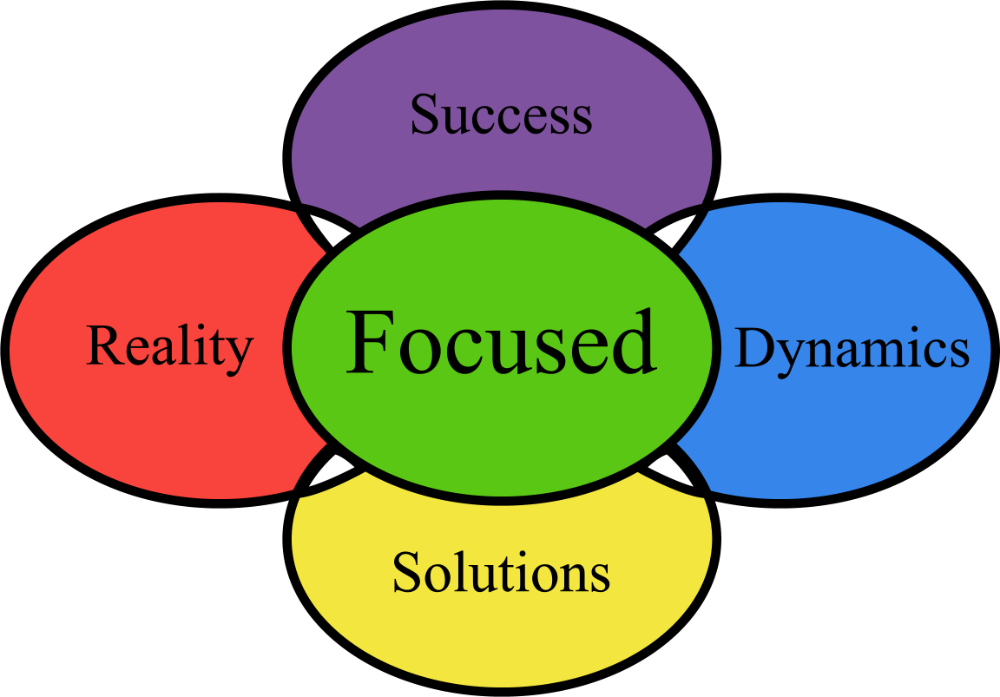
If we introduce copartisan as a new paradigm, each member of Congress could instill a new mindset where all political views are seen as part of one team, aligning the ideas around shared values and not around opposing ideologies. We could focus on solutions one reality at a time. The separate wheels of policy could turn side by side instead of one in front of the other.
We could enhance the connection through the partisan mindset as we build empathy before the agenda. This would bring the people into the discussion and not the opponents. It is different on a sports field where one team must win and one team must lose. In our political process, in partisanship, the end result is for everyone to win.
If we grow with copartisanship, everyone will be valued. We will understand the “why” behind the decisions and not just the “what” based on political party beliefs. We can focus on why each line item is for the people, the US Citizens, and not for a political party or a vote purchased through a political Action Committee through a buy-partisan vote.
The copartisan process improves our balance, strengthens our foundation and exemplifies our ability to collaborate for the good of the people. It breaks down the issues to understand and eliminates single-sided or one-sided viewpoints found in a bipartisan approach. With copartisanship, Unity isn’t the result, it is the strategy.
The benefits of a copartisan approach and mindset include addressing the root problems with broader support. It can also increase our trust in the government leaders as it focuses on the reality of the problems and the why instead of political polarization. The foolish ideas pushed by only a few will break down immediately because we understand the why, the common goals that benefit everyone.
A copartisan approach cuts through the bipartisan fog as it moves us from gridlock to Unity.
Let me know if you want me to bring this solution to your organization through a keynote or workshop. Why does anyone want to split the road when one path can lead to victory for all?
